-
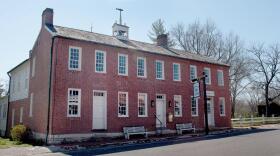 The J. Huston Tavern in Arrow Rock was the first building in Missouri to be set aside for historic preservation with public funding. It was built by enslaved African Americans and served travelers who came through the area.
 -
 Artist Kahlil Robert Irving is a Missouri native with two solo exhibitions in museums right now. His exhibition at the Nerman Museum of Contemporary Art in Overland Park grapples with how tools and technology challenge perceptions of what we see and how we understand information.
 -
 On Jan. 11, also known as Missouri Emancipation Day, the Missouri History Museum is bringing new attention to an antebellum insurrection plot that was secretly devised by free Black Americans in St. Louis — and how an insubordinate war hero ticked off Lincoln with his antics to free enslaved Missourians during the Civil War.
 -
 William Jewell College has commissioned a new choral work, “The Canon for Racial Reconciliation,” which is part of a broader effort at the college to reckon with the institution's racial history. The music melds Orthodox liturgy with gospel sounds, and is co-written by composers Nicholas Reeves and Isaac Cates.
 -
 Three St. Louis-area locations have been added to the National Park Service's National Underground Railroad Network to Freedom for their connections to enslaved people.
 -
 On Tuesday, three U.S. House representatives, two Democrats and one Republican, introduced a bill to make the site of the historic town of Quindaro in Kansas City, Kansas, a National Historic Landmark. The town was once a stop on the Underground Railroad and a thriving multicultural community.
 -
 Dred Scott, the enslaved man whose case made it to the U.S. Supreme Court, is getting a new memorial monument. The Dred Scott Heritage Foundation is dedicating the monument in his honor on Saturday at Calvary Cemetery in St. Louis.
 -
 Legislators in Jackson County will consider a new resolution calling for statues of President Andrew Jackson to be dismantled and removed from the front of courthouses in Kansas City and Independence. The namesake of Jackson County was a slaveholder and largely responsible for the forced removal of Native Americans, but a previous vote to remove the statue failed in 2020.
 -
 Legislators will consider a resolution calling for the statue of President Andrew Jackson in front of county courthouses to be dismantled and stored. Jackson was a slave owner and a supporter of the forced relocation of Native Americans. A county-wide vote to remove the statue failed in 2020.
 -
 The bill, Reparations NOW, calls for $14 trillion to Black Americans as compensation for slavery and Jim Crow.
 -
 An independent group at William Jewell revealed the college founders’ deep ties to slavery, including the fact that enslaved people helped build Jewell Hall and that the college's namesake Dr. William Jewell did not free all the people he enslaved, contrary to previous accounts.
 -
 On Jan. 21, Washington Chapel C.M.E. Church was broken into and a piece of a memorial stained glass window removed. The church was built in 1907 by formerly enslaved families in Parkville, Missouri.

© 2024 Kansas City Public Radio
NPR in Kansas City
Play Live Radio
Next Up:
0:00
0:00
Available On Air Stations


