Want more news about agriculture and the environment? Sign up for the Harvest newsletter for our latest reporting, plus behind-the-scenes exclusives.
Jonathan Miller is no stranger to the eerie howl of a wolf in the middle of the night.
“It definitely raises the hair on the back of your neck,” he said of hearing the sound from his farm in Michigan’s Upper Peninsula.
Miller has cause to be nervous.
He recalls the first time a gray wolf came onto his property and killed a newborn calf more than 20 years ago.
It dragged the calf and the hutch it was roped to across the yard and into the road. By morning, all that was left were remains.
“I didn’t even recognize it, I thought it was a piece of plastic laying along the driveway,” Miller said. “And then I double-took, ‘Oh, that was one of my calves.’”
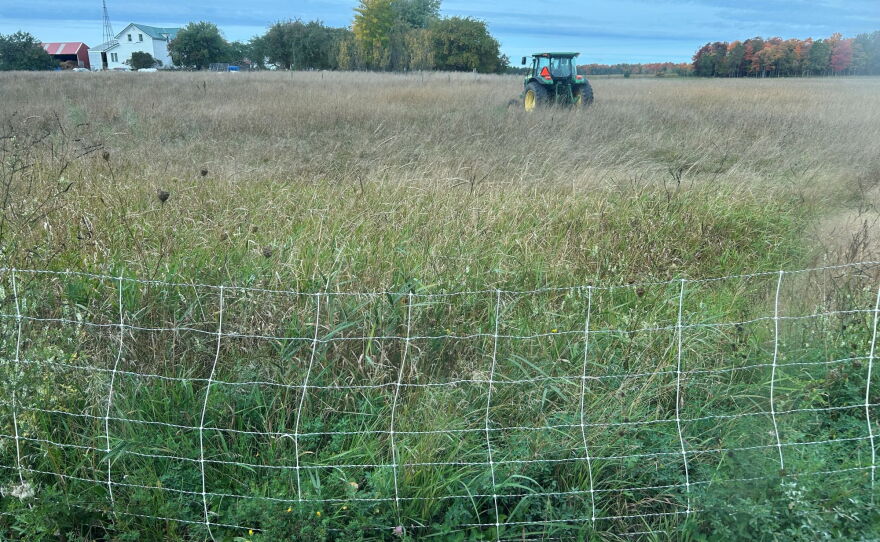
Miller’s farm lost more livestock, until he put up electric fencing.
Right now, farmers and ranchers across the country are trying to protect their cattle from the apex predator, but in the Upper Midwest, they aren’t allowed to kill them.
Last month, President Donald Trump signed an executive order that aims to change that by removing gray wolves from the U. S. Endangered Species list.
“I'm signing an order authorizing ranchers to protect rural communities and cattle herds from the predatory Mexican gray wolf and others,” said Trump during his announcement of the orders on Sept. 4.
The secretary of interior, Doug Burgum, has until Dec. 3 to either approve or deny that order.
If it’s approved, farmers and ranchers in Michigan, Minnesota and Wisconsin will be able to kill a wolf if it’s actively threatening their livestock.
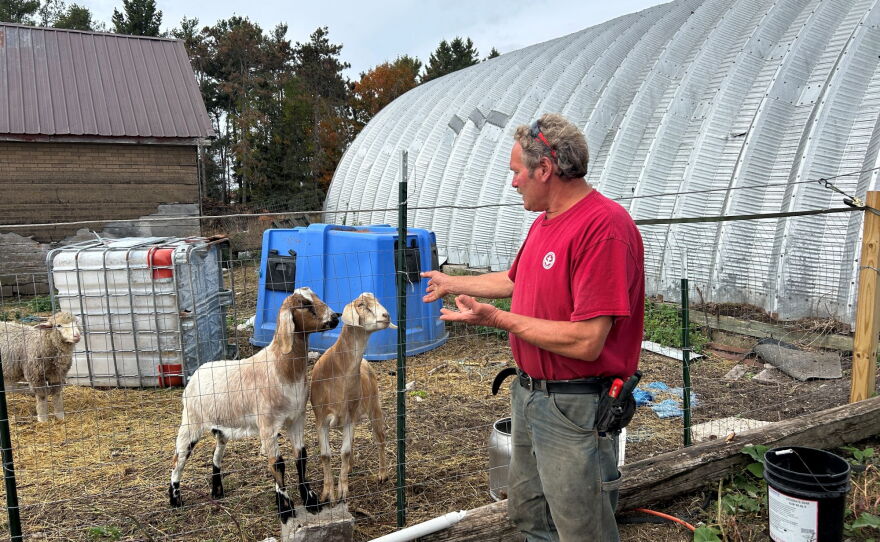
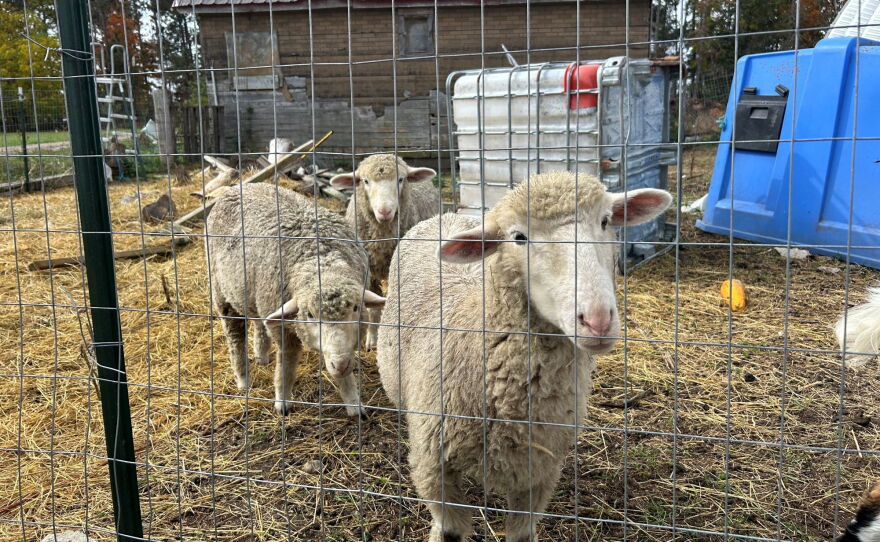
Miller supports delisting. He said gray wolves are being killed regardless of their endangered status.
“The local people are taking care of the situation themselves, but we have to do it in the back way,” he said.
While many ranchers are happy with the president’s move and say it will help them protect their livestock, wolf advocacy groups worry that delisting could hurt the species’ recovering population.
‘Secure population’
Today, there are more than 4,000 gray wolves across the Upper Midwest.
But it hasn’t always been that way. Their populations hit dangerous lows throughout the country after decades of unregulated killings. Many states, including Michigan, Wisconsin and Minnesota, had incentivized the species' demise with bounties until the mid-1900s.
Gray wolves gained federal protection in 1974, the year after Congress passed the Endangered Species Act. Since then, populations have bounced back across the Upper Midwest. According to estimates from the three states’ departments of natural resources, Michigan has over 750 gray wolves, Wisconsin has more than 1,200 and Minnesota, nearly 2,500.
Michigan Department of Natural Resources large carnivore specialist Brian Roell said those numbers exceed the federal delisting requirements. Michigan and Wisconsin needed to reach a shared population of 100 wolves, while gray wolf populations remained stable or continued to grow in Minnesota.
“We should be celebrating that we brought a large carnivore from the brink of extinction to where we now have secure populations in all three Great Lake states,” said Roell.

But advocates for the gray wolf say those delisting requirements aren’t sufficient and that removing protections on the species would be premature.
Regan Downey is the director of education and advocacy for the Wolf Conservation Center. She said the gray wolf is a keystone species, meaning that it impacts other organisms within its ecosystem.
“If you have wolves in an area, they are going to be preying upon deer, elk, bison,” Downey said. “That in turn, can impact the plants and the vegetation that those elk would otherwise be grazing on. And so we can see a return and a growth in plant height. We don't see as much over browsing and overgrazing.”
Downey said that’s just one example of how wolves influence their surroundings. She said if the carnivore is taken off the endangered list, that could have a lingering effect on their ecosystems.
In the hands of the states
If President Trump’s plan goes through, it won’t be the first time gray wolves have been delisted.
In fact, wolves in the Northern Rocky Mountains, including in Wyoming, Idaho and Montana, have been excluded from the U.S. Endangered Species List since 2009.
For states in the Upper Midwest, the Obama administration issued a partial delisting in 2011, removing protections for the wolves. That ended in 2014. Then in 2020, the Trump administration removed gray wolves from the endangered species list completely. But the efforts of both presidents were thwarted by federal judges.
During those windows of being delisted, the states decided how the species would be managed, and those state laws will take effect if the wolves are delisted again.
“There are not adequate regulatory mechanisms in place to ensure that wolves continue to grow and don't immediately drop in populations,” Downey said. “The states have not set up those adequate mechanisms.”
In Wisconsin, current laws would mandate a hunting season. During the wolf hunting season in 2021, hunters exceeded the state’s quota for gray wolves in a matter of days.
Molly Meister, a spokesperson from the Wisconsin Department of Natural Resources told Harvest Public Media in an email statement that regulations for wolf harvesting have been changed to prevent that from happening again.
“These changes include shorter harvest registration times, wolf licenses being zone-specific, and more clarity in license issuance and zone closure factors,” Meister wrote.

According to Michigan and Minnesota’s departments of natural resources, both state governments have the authority to add wolf hunting seasons, but that would take some time to be reinstated.
All three Great Lakes states would permit lethal removal of a gray wolf, if it was actively threatening livestock or pets. For Michigan and Minnesota, unless a resident has a special permit, the wolf has to be in the act of depredation, or killing livestock.
“So if a farmer sees a wolf chasing a cow, he can lethally take that wolf,” said Roell from Michigan’s DNR. “Then we also have a private land lethal control permit that we would actually issue to a farm.”
Having those permits allows farmers to kill wolves preventively.
In Michigan, Roell said there’s been three confirmed wolf depredations this year.
But depredation numbers are much higher in other states. Last year, Minnesota documented 102 confirmed livestock and pet killings because of wolves. So far this year, Wisconsin documented 60 and Colorado has 45 depredations so far.

Farmers and ranchers have been dealing with a variety of stressors in recent years, including trade uncertainty, high costs and extreme weather.
For ranchers in Colorado, drought and an unstable beef market have been big financial strains, and losing livestock to wolves is one more financial pressure.
“People are really upset,” said Callie Scritchfield with the state’s cattlemen’s association. “It’s not just a passing conversation. People are very emotional over this.”
Scritchfield said ranchers in Colorado also are having a hard time proving when a wolf kills their livestock. Producers don’t get reimbursed if such a killing isn’t confirmed.
“We do not believe that they identify all of the wolf depredations as wolf depredations,” Scritchfield said.
Losing a calf can cost an operation hundreds to thousands of dollars, according to Wisconsin beef farmer Dustin Soyring. He said a pack of wolves can easily eat an entire calf or sheep – bones, fur and all.
When a calf goes missing, Soyring said that’s usually an indication that wolves were there, but the Department of Natural Resources needs tangible proof.
“It becomes a chore to prove a calf went missing because of wolves,” Soyring said.
Finding common ground
Even with documented killings of livestock, some experts doubt that delisting gray wolves will be a huge help to farmers and ranchers.
“Wolves aren't really doing all these bad things that people like to portray that they're doing,” said Roell, the large carnivore specialist. “And it’s not going to save the beef industry in Michigan by getting wolves off the list, and it's actually not going to do it nationwide either.”
Adrian Treves is a researcher at the University of Wisconsin. His work on a global study found that killing wolves is not effective in protecting livestock.
“We found evidence that neighboring farms suffered more losses after wolves were killed on a given farm,” Treves said. “We also haven't found evidence that delisting the wolves is a good way to protect them.”

According to his research, non-lethal methods are the most effective way to deter wolves from killing livestock and still protect them.
Many farmers and ranchers are already using methods like these. Miller from Michigan, said his livestock have been largely okay since installing electric fencing.
Soyring, the beef farmer from Wisconsin, said the most permanent solution for him has been a tall woven fence that the U.S. Department of Agriculture installed on his farm.
But not every farmer and rancher has the resources to install the proper fencing.
“It's a fine line and there's never enough money to do the improvements and the protections that many farmers and ranchers need to be able to survive and continue,” he said.
Soyring said he understands that wolves have a place in the ecosystem — he just wishes the predators were less of a nuisance for farmers.
“Instead of just saying that the wolves belong, well, they need to show ways to allow these farmers and ranchers and the wolves to coexist to make it more economical for both parties.”
Harvest Public Media is a collaboration of public media newsrooms in the Midwest and Great Plains. It reports on food systems, agriculture and rural issues.