
Election 2026

Are you ready to vote, Kansas City?
2026 is a midterm election year on the federal level, with this fall's contests deciding which party will control Congress. But it's turning out to be a critical year for the Kansas City region as well.
In Kansas and Missouri, voters will decide races for U.S. Senate, every U.S. House seat, governor and more. Critical constitutional amendments will appear on the ballots in both states. And around Kansas City, voters will decide a number of important bond issues and more.
General Election Day is on Nov. 3, 2026.
No matter which state you're voting from, KCUR wants to make sure you have all the information you need before you fill out your ballot.
Over the year, we'll be providing guides and resources for the 2026 election — plus interviews with candidates and spotlights on individual races.
Want to keep up with election news? Subscribe to KCUR's free morning newsletter, The Early Bird.

Voter tips
- Are you registered to vote? You can check your voter status and start the registration process online in Missouri and in Kansas.
- Do you know your polling place for Election Day? Check your location in Missouri and Kansas. Take note: It may have changed since the last time you voted.
- Do you have a photo ID? Both Kansas and Missouri require an ID to vote, but the accepted forms of identification differ by state. If you don’t bring proper ID, you’ll have to cast a provisional ballot.
- Do you know who represents you in the state legislature? Find out who's on your ballot. Look up your representatives in in Kansas and in Missouri.
2026 election dates & deadlines
Missouri voter registration deadline for primary:July 8Kansas voter registration deadline for primary:July 14Advance voting begins in Kansas:July 15Primary election day:Aug. 4Missouri voter registration deadline for general:Oct. 7Kansas voter registration deadline for general:Oct. 13- Advance voting begins in Kansas: Oct. 14
- Advance voting begins in Missouri: Oct. 20
- General election day: Nov. 3
All of the content below — and everything on our website — is available for free, always, no paywall or login needed. But if you want to support our journalism, you can become a member of KCUR here.
-
 Do you feel ready to vote this November? What races, candidates, amendments or other items are you most interested in? What information do you need to better understand your ballot? Text KCUR at 816-601-4777 to join the chat.
 -
 In the Nov. 3 election, Missouri voters can weigh in on Amendments 3, 6, 7 and 8, and Proposition A. The measures include an abortion ban, a referendum on a redrawn congressional map and protections to voter-proposed ballot measures.
 -
 Amendment 3 on Missouri's November ballot doesn't just reverse the 2024 abortion rights amendment passed by voters. It also would place within the state constitution a ban on gender-affirming care for transgender minors.
 -
 Missouri House Speaker Jon Patterson and Democratic state Rep. Keri Ingle are competing for a closely watched state Senate seat representing Lee's Summit and Blue Springs. The race could determine whether Republicans maintain their supermajority in the Missouri Senate.
 -
 While Republican Sen. Roger Marshall has blamed Hamilton for one-fourth of churches leaving the denomination, church members and experts say the answer is more complex.
 -
 Kansas is just over one week away from the 2026 midterm election. Pastor Adam Hamilton, the Democratic candidate for U.S. Senate in Kansas, spoke to KCUR's Up To Date about his focus on “leading from the middle” and his frustration with the Trump administration’s foreign policy.
 -
Midterm elections are just over a week away, and a lot is at stake for both Republicans and Democrats in Missouri. Several key measures and races appearing on the ballot could have big impacts on the future of the state's political ecosystem.
-
 Supporters say the proposed ban protects women facing medical emergencies and survivors of sexual assault. Critics question whether those protections would work in practice.
 -
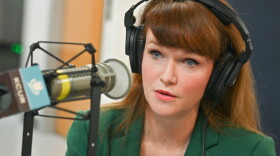 Keri Ingle, who has represented in the Missouri House since 2019, is running against outgoing Missouri House Speaker Jon Patterson to represent Lee’s Summit, Blue Springs and other cities in eastern Jackson County in the state Senate. Democrats are targeting the seat in hopes of breaking the chamber’s Republican supermajority.
 -
 People who don’t typically vote in midterm elections were the target audience during the Wednesday night debate between Republican U.S. Sen. Roger Marshall and Democrat Adam Hamilton. The outcome of the race could help flip the balance of power in the Senate.


