

Celia Llopis-Jepsen
Reporter, Harvest Public MediaI'm the creator and host of the environmental podcast Up From Dust. I write about how the world is transforming around us, from topsoil loss and invasive species to climate change. My goal is to explain why these stories matter to the Midwest and Great Plains, and to report on the farmers, ranchers, scientists and other engaged people working to make the region more resilient.
I previously covered environment and other beats for the Kansas News Service.
I have a master's in journalism from Columbia University and a master’s in bilingualism studies from Stockholm University in Sweden. Before coming to Kansas, I spent a decade living and working in Sweden, Germany and Taiwan, including several cherished years working for the Taipei Times.
Email me at celia@kcur.org.
-
 People have harvested wild foods for millennia, but learning how to do it today is harder, because fewer people have those skills. These groups are teaching people to eat "field to fork" again.
 -
 What should you do when you find a tick on yourself? Don't freak out — we have you covered. From the KCUR Studios and Harvest Public Media podcast Up From Dust, a team of scientists help answer that question, plus how to avoid it in the first place.
 -
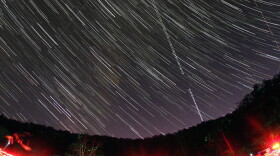 The Kansas City region has a growing community of night-time enthusiasts, whose efforts to protect the vanishing darkness from light pollution are bringing attention to a wide variety of natural wonders worth staying up for.
 -
You know that moment of panic when you find a tick on yourself? Well, we assembled a crack team of tick scientists to tell us exactly what to do when that happens — and better yet, how to avoid it in the first place. We’ll learn what repellents to use, why clothes dryers are tick kryptonite, and (gulp) how to properly remove the pesky creatures.
-
 Hundreds of pesticides are legal, but that doesn’t mean that their impacts on health are fully understood. Cleaning produce before eating it reduces your exposure.
 -
Justin was terrified of snakes – until he learned they’re scared of him, too. Tay’s fear was soothed after discovering the Internet’s affection for “nope ropes” and “danger noodles.” Can we ease our discomfort around critters by getting to know the animals? We spoke with psychologists, who offer their tips for overcoming phobias. This is part two of a two-part series on getting over the fears that spoil our outdoor fun.
-
How do you stop being so afraid? Tracy Twombly had such a strong phobia of spiders, it was messing with her life — stressing her out while she was working at her native plant nursery or hiking through the woods. So she embarked on a journey to make peace with her eight-legged neighbors (even the extra hairy ones). This is part one of a two-part series on getting over the fears that spoil our outdoor fun.
-
 Pesticide pollution is a problem especially in the middle of the country. And sometimes there's enough of it to possibly hurt aquatic plants and animals.
 -
 These ranchers tried to protect grassland from trees and shrubs in all the traditional ways. It didn’t work. So they brought in hungry goats that turned woody plants into a cash stream.
 -
All summer long, we run mowers over our lawns to keep them the perfect height – and run sprinklers to keep them emerald green. Add fertilizer and weedkillers into the mix, and it’s a real resource drain. But there’s something else about lawns: They’re inhospitable to most wildlife. Celia joins Marielle Segarra on NPR’s Life Kit to explain how to push back against American lawn culture by killing a small patch of grass and turning it into a wildlife friendly garden.


