-
 It's the second time in a week that Missouri Attorney General Catherine Hanaway has announced an inquiry into an entity that has sparred with the University of Missouri System president.
 -
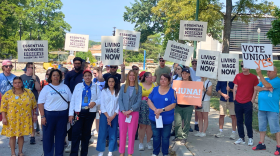 University of Missouri-Kansas City workers are pushing for a $19 wage floor for service and maintenance jobs, but Missouri law says public sector workers have no right to strike. The university says its pay structure is “based on the cost of labor rather than the cost of living.”
 -
 A report from the University of Missouri highlights gains for communities with renewable energy infrastructure.
 -
 The shape of a toilet seat, combined with increased time in the bathroom, can cause undue strain on one's nether regions, according to a colorectal surgeon at the University of Missouri.
 -
 Union workers used the large tailgating crowd Thursday to spread their push for a $19 per hour minimum wage. The union is also demanding the reversal of benefit cuts announced by MU Health Care earlier this year.
 -
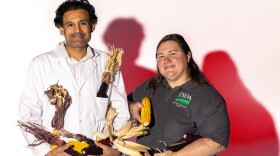 Shades of red extracted from an ancient corn variety held up to heat and other conditions typical of food processing and storage. Researchers are exploring whether this natural dye alternative could open new markets for Midwest farmers.
 -
 A sting from an Asian needle ant can cause anaphylaxis. The ant tends to prefer forests and wood-rich areas, has a distinctive stinger, and has a lighter reddish-brown color on the legs.
 -
 As Kansas City builds a reputation as a haven for women's sports, players for the new KC Diamonds softball team are excited to call it home.
 -
 Since the federal Stop Campus Hazing Act passed two years ago, Mizzou has increased its efforts to curb hazing on campus.
 -
 The Board of Curators unanimously approved a 4% tuition increase for undergraduates on all University of Missouri campuses on Thursday. At the University of Missouri-Kansas City, tuition will go up by about $247 per semester.
 -
 A 3% tuition hike for graduate students is also recommended, ranging from $16 to $29 per credit hour based on campus and program.
 -
 "It does feel like this is like a microcosm of what the Black experience looks like in America," one alum said.

© 2026 Kansas City Public Radio
NPR in Kansas City
Play Live Radio
Next Up:
0:00
0:00
Available On Air Stations


