-
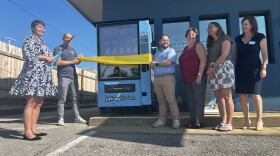 The free-to-use machine, called a Bluebox, has public health items like the naloxone product Narcan, fentanyl test strips, COVID tests, safe sex kits and more. It’s the third such vending machine in Jackson County, with more still to be installed.
 -
 Missouri saw 2,690 deaths from Alzheimer's in 2024 — a 145% increase since 2000. One southeast Missouri couple is trying to convince lawmakers their support is critical. Plus: A substance abuse counselor in Kansas City has developed secular recovery programs focused on inclusivity.
 -
 Michael DePriest and the Kansas City Public Library have teamed up to develop a program they hope will help more people who are struggling. He's adapted the 12 steps to make them feel welcoming to people of all — or no — religious backgrounds.
 -
 Young people are at risk for kratom abuse, said PreventED’s Jenny Armbruster. Missouri’s attorney general called the kratom compound 7-OH “deadly.”
 -
 The Missouri Department of Public Safety and other state departments wrote in their alert that nitazene can be five to 10 times more potent than fentanyl. Recent wastewater surveillance reports from Missouri schools shows that it's becoming more common.
 -
 In a prison system rife with drugs, a new civil rights lawsuit accuses the Missouri Department of Corrections of punishing people for addiction, rather than treating it.
 -
 A new report finds that states with legalized sports betting aren’t doing enough to protect people from gambling trouble.
 -
 Nearly 40% of respondents to a 2022 Wyandotte County assessment said mental health was the biggest concern in the community. Several health care services will soon be offered at a facility in downtown Kansas City, Kansas.
 -
 City Council restricted the sale of 7-OH, a derivative of kratom that’s marketed as an energy booster. Public and professional opinions remain split over purported health benefits, potential addiction risks and the ease with which minors can get ahold of the products.
 -
 The Trump administration sent hundreds of letters Tuesday terminating federal grants supporting mental health and drug addiction services. The cuts could total as much as $2 billion.
 -
 Missouri has approved three recovery high schools to open in Kansas City, St. Louis and Cape Girardeau. The schools will help support students with their recovery from substance use while they earn their high school degree.
 -
 Kansas City’s Wellness Court is partnering with a local yoga studio to offer a program called “Healing Justice.” It combines yoga, meditation, and cognitive behavioral therapy to reduce stress and recidivism among nonviolent offenders.

© 2026 Kansas City Public Radio
NPR in Kansas City
Play Live Radio
Next Up:
0:00
0:00
Available On Air Stations


