-
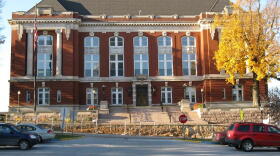 In the Nov. 3 election, Missouri voters will decide whether 15 judges, including a supreme court justice and appellate court justice, will keep their seats. Here's what to know about the retention process and the judges up for a vote around Kansas City.
 -
 Missouri redrew its Congressional map to give Trump an election victory. The plan’s legal collapse was "a stress test for the rule of law," said former Missouri Supreme Court justice Michael Wolff.
 -
 The case looks at the grading process of marijuana facility licenses in 2019, which the state auditor found earlier this year to have erratic scoring and poor documentation.
 -
 Missouri legislators passed a law in 2022 making it a crime for school employees to provide students with what was defined as explicit sexual material. Last year, a judge ruled the law unconstitutional.
 -
 Opponents of Missouri’s gerrymandered congressional map are asking the justices to block a federal ruling requiring its use as voting begins.
 -
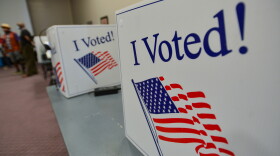 "A voter who has already cast an absentee ballot cannot vote another ballot," even if the legal back-and-forth over Missouri's congressional map ends with a different version being used, local election officials said.
 -
 While the 8th Circuit Court judges appeared sympathetic to the Republican plaintiffs, redistricting proponents would also need to overcome barriers from the U.S. Supreme Court and warnings from elections officials that it’s now too late to change course for the November election.
 -
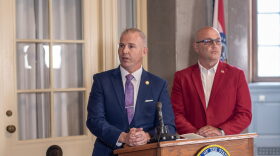 Secretary of State Denny Hoskins wants the 8th Circuit Court to restore the redrawn, GOP-favoring congressional districts and toss out the ballot referendum challenging the map. But county clerks argued that any more changes to the November election would require delays, massive costs and voter confusion.
 -
 The Missouri Supreme Court ruled that the state must use its 2022 congressional map for the upcoming November elections — rather than the redrawn map used during the primary. That means a much different race for candidates in the 5th Congressional District, Democrat Rep. Emanuel Cleaver II and his Republican Rick Brattin.
 -
 The legal back-and-forth over Missouri's congressional maps is unprecedented in American politics. Current 5th District U.S. Rep. Emanuel Cleaver II and his Republican opponent, state Sen. Rick Brattin, share their thoughts on what transpired in the courts — and what it may mean for November.
 -
 The 8th Circuit Court will hear arguments Thursday as Republican officials attempt to institute a redrawn congressional map for November's election. But they face a narrow legal path after a U.S. Supreme Court stay and a state ruling that the map never took effect.
 -
 At the center of the case is a Missouri law that says the secretary of state must pay between $100 and $500 to an aggrieved person if the officeholder “neglect[s] or refuse[s] to perform any of the duties enjoined on him by law."

© 2026 Kansas City Public Radio
NPR in Kansas City
Play Live Radio
Next Up:
0:00
0:00
Available On Air Stations


