-
 Bruce Winter, who performed for more than five decades as Melinda Ryder, was a pioneering figure widely credited with helping revive the drag scene in Kansas City. Winter died September 8, at age 70, after a six-month battle with cancer.
 -
 Harry Houdini was a master of escape. He was also a self-promoter who once performed a stunt in downtown Kansas City to draw an audience to his shows. We'll learn about the Houdini escape that originated right here in Kansas City.
 -
 Harry Houdini's connection to Kansas City started out by accident, but it lasted throughout his legendary career. A new historic marker will commemorate the debut of his first escape from a straitjacket while suspended in midair.
 -
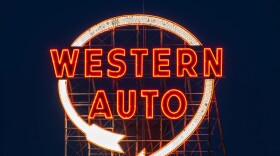 The 70-foot-tall sign’s bright neon arrow and 11 letters have been restored and its 3,000 light bulbs have been replaced. So when will the metro get to enjoy the latest glow up for Kansas City’s most recognizable building-topper?
 -
 The names of nine people who were enslaved in Jackson County surfaced in old property records from the estate of Pony Express tycoon Alexander Majors. Now, an online database is making hundreds of records referencing enslavement easier to search — and shedding new light on slavery's deep roots in Missouri.
 -
 Robert Warrior, a citizen of the Osage Nation, said serving as a consultant on the new series helped improve how Native Americans are portrayed as compared to the original "Little House on the Prairie" books.
 -
Maud Wagner, one of the country’s first known female commercial tattoo artists, was born in Emporia, Kansas. She joined a sideshow act with her sister until a fateful meeting pushed her to pursue carnival stardom, inked from head to toe.
-
 The Cowtown Vintage Base Ball Club started in 2004. Volunteer players represent two 1879 Wichita teams, the Red Stockings and the Bull Dozers.
 -
 A break-in at a Kansas farmhouse unearthed a trove of artifacts from Maud Wagner, one of the country’s first known female commercial tattoo artists. Wagner was born in Emporia and ran off to join the circus until a fateful meeting pushed her to pursue carnival stardom, inked from head to toe. KCUR’s Julie Denesha and Mackenzie Martin explore Wagner’s journey and the permanent mark she left on the world.
 -
A break-in at a Kansas farmhouse unearthed a trove of artifacts from Maud Wagner, one of the country’s first known female commercial tattoo artists. Wagner was born in Emporia and joined a sideshow act with her sister until a fateful meeting pushed her to pursue carnival stardom, inked from head to toe.
-
 The 1951 Black Friday Flood on the Kaw River destroyed Kansas City's Stockyards and meatpacking industry, did $12 billion worth of damage and displaced 750,000 people.
 -
The discovery of an ancient Kansas settlement named Etzanoa is challenging long-held views that all Indigenous people on the Great Plains were nomadic. Plus: Kansas boasts its own version of the Liberty Bell at a small town in Marion County.

© 2026 Kansas City Public Radio
NPR in Kansas City
Play Live Radio
Next Up:
0:00
0:00
Available On Air Stations


