-
 In November, voters will choose between Democrat Amy Diediker and Republican Jim McMullen for the Kansas Board of Education's 3rd District seat. Either candidate would be new to the board.
 -
 A St. Louis scientist has spent her career studying sound and is now speaking out about the noise pollution that data centers could bring to the region.
 -
 Hawley said his main worries were personal privacy and that people have the right to be treated as innocent until proven guilty.
 -
 The Missouri legislature has yet to act on data centers, with one bill on the topic only getting a House hearing last year. Gov. Mike Kehoe has repeatedly touted the benefits of building data centers in the state.
 -
 Data centers that power AI are exploding across the Midwest — and so is opposition to them. Now, people across the political spectrum want to see stricter regulation and more transparency.
 -
 First District voters recalled a City Council member for the first time in Independence's history after he voted to approve a multibillion-dollar data center. A special election to fill the vacancy will need to be scheduled.
 -
 Help from the University of Kansas and funding are allowing school districts to study the best ways to use AI in classrooms.
 -
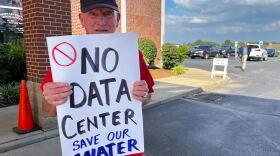 Big tech companies are facing formidable opposition from a coalition of people across the political spectrum. Meanwhile, local elected officials find themselves scrambling to draft regulations and defend themselves against accusations of secrecy.
 -
 As technology companies build AI data centers across Missouri, consumer advocates worry the cost for the vast infrastructure upgrades needed will fall to the average energy consumers unless new laws are passed.
 -
 Hawley, the chair of the Senate Judiciary Subcommittee on Crime and Counterterrorism, , demanded Flock Safety CEO Garrett Langley provide answers on what safeguards the company employs to protect Americans' data.
 -
 The Missouri House Future Caucus created a new checklist to help local communities consider data center proposals as they move to the state. Among the questions are how resources like water will be protected, and how the local community will benefit after tax incentives and infrastructure costs.
 -
 The middle of the U.S. is seeing a higher volume of cyberattacks than other regions. Artificial intelligence is exacerbating the problem. A cybersecurity expert shares why the Midwest is a prime target and how people should protect sensitive information.

© 2026 Kansas City Public Radio
NPR in Kansas City
Play Live Radio
Next Up:
0:00
0:00
Available On Air Stations


