-
 Ferguson has been under a consent decree since 2016, two years after a Ferguson police officer killed Michael Brown Jr. and a DOJ investigation found the city violated residents' civil rights through policing, traffic stops and court fines.
 -
 Jackson County voters will decide whether to renew the county’s quarter-cent anti-crime sales tax, known as COMBAT. The tax generates between $25 and $30 million per year to support the court system, county prosecutor’s office and law enforcement agencies. Dozens of nonprofits also receive grants.
 -
 A Jackson County jury found Fredrick Scott guilty of first-degree murder in four of six killings, capping a case that spanned nearly a decade. He was acquitted on two other counts. Scott faces life in prison without the possibility of parole.
 -
 The Kansas Commission on Judicial Conduct filed a 17-page formal complaint against Wyandotte County District Judge Tony Martinez, who is up for retention in the upcoming election. It alleged Martinez’s behavior appeared to breach two Kansas judicial canons while he served as a district judge. Martinez denies all allegations.
 -
 Over half of death row prisoners in Missouri have been executed. Nationally, the rate is 18%.
 -
 The work of the Midwest Innocence Project has resulted in 18 people freed or exonerated from prison, including several in Missouri and Kansas. But the nonprofit that provides pro bono legal work is in jeopardy due to a loss in federal grants and other financial strains.
 -
 Over the last three years, Kansas City Police Department statistics show a decrease in both homicides and nonfatal shootings. Police and community partners attribute the drop to a combination of preventive tactics.
 -
 For the past 25 years, the Midwest Innocence Project has worked at no cost to free incarcerated individuals who believe they were wrongfully convicted of crimes in Missouri, Kansas, Nebraska and Iowa.
 -
 Jackson County is voting for its new county executive this year. All the candidates put property taxes as their top priority. But go beyond that, and the differences creep in.
 -
 For more than 35 years, Cliff Middleton has been fighting to free his father from a Missouri prison for a crime they say he didn’t commit. In 1991, Ken Middleton was convicted of murdering his wife in their Blue Springs home, but the Georgetown University Law Center program “Making an Exoneree” reinvestigated and noted glaring discrepancies with his case.
 -
 More than 900 people who believe they were wrongfully convicted are on a waitlist for the Midwest Innocence Project, which provides pro bono legal representation in Missouri, Kansas, Iowa, Nebraska and Arkansas. The organization is celebrating 25 years of service in 2026.
 -
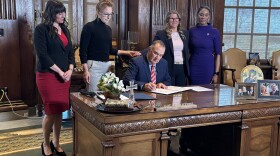 While a pregnant woman can file for divorce in Missouri, under current law a judge can prevent it from being finalized. Gov. Mike Kehoe signed legislation removing those barriers, as well as a wide-reaching criminal justice bill.

© 2026 Kansas City Public Radio
NPR in Kansas City
Play Live Radio
Next Up:
0:00
0:00
Available On Air Stations


