-
 A federal judge issued a preliminary injunction late Wednesday restricting a Homeland Security Investigations office voter fraud investigation in Missouri and eight other states, likening the tactic to voter intimidation.
 -
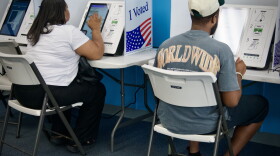 Election Day in Kansas and Missouri is on Nov. 3, and early voting has already begun. If you’re trying to figure out how to start the process of understanding your ballot, one Kansas political scientist says “Google’s your friend." (And so is KCUR!)
 -
 Incumbent U.S. Sen. Roger Marshall, a Republican, and Democratic challenger Adam Hamilton are vying to represent Kansas in the U.S. Senate on the Nov. 3 ballot.
 -
 Small-business owners, nonprofit leaders, school board members and a radio host are vying for four positions on the Jackson County Legislature. Here's what to know about their priorities.
 -
 A proposed amendment to the Missouri Constitution this November would make it harder for state lawmakers to change or overturn laws passed by voters through initiative petitions. Opponents say it will be harder to fix unintended consequences of legislation.
 -
A proposed amendment to the Kansas constitution would specify that only U.S. citizens may vote in elections. But the problem, according to opponents, is that non-citizens are already prohibited from voting.
-
 A plumber, an attorney, an incumbent and a health insurance broker are the at-large candidates for the Jackson County Legislature.
 -
 In November, voters will choose between Democrat Amy Diediker and Republican Jim McMullen for the Kansas Board of Education's 3rd District seat. Either candidate would be new to the board.
 -
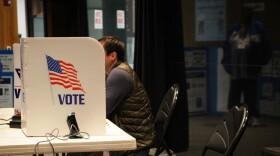 Missouri Secretary of State Denny Hoskins has sent letters to about 1,000 registered voters notifying them that they’ve been flagged as potentially being noncitizens. The U.S. Supreme Court last week allowed the continued use of the SAVE database.
 -
 Missouri is the only state voting this year on removing abortion protections already on the books.
 -
 Opponents of Missouri’s gerrymandered congressional map are asking the justices to block a federal ruling requiring its use as voting begins.
 -
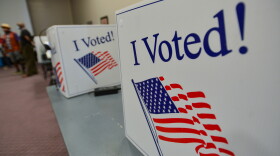 "A voter who has already cast an absentee ballot cannot vote another ballot," even if the legal back-and-forth over Missouri's congressional map ends with a different version being used, local election officials said.

© 2026 Kansas City Public Radio
NPR in Kansas City
Play Live Radio
Next Up:
0:00
0:00
Available On Air Stations


